>>

A classic, buttery herb stuffing with crisp edges and tender interior—made with a mix of bread, plenty of butter, fresh herbs, and simple pantry ingredients. Perfect for holiday tables or comforting family dinners.
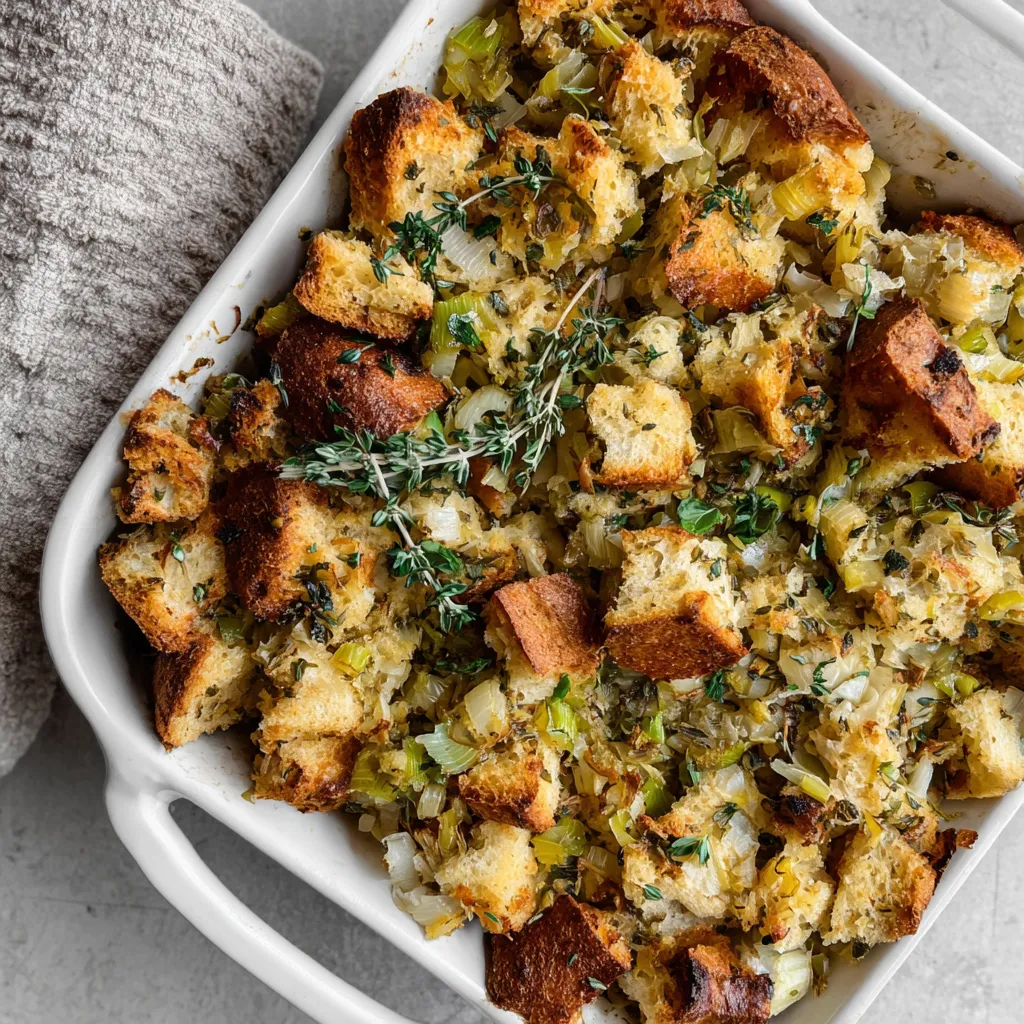
This buttery herb stuffing is the recipe I reach for whenever I want something reliably comforting, aromatic, and worth lingering over at the table. I first learned this combination in my mother’s kitchen, where she mixed stale and fresh bread with generous knobs of butter and a tangle of fresh herbs from the windowsill. It took one chilly November when I was determined to improve my holiday spread to realize that the simplest elements—good bread, sweet onion, crisp celery, and a precise balance of sage, rosemary, and parsley—make the most memorable dish. The texture is what keeps people coming back: a tender interior flecked with herb pockets and a browned, buttery crust on top that snaps delightfully with each scoop.
I discovered a few key tricks while making this more often: use two kinds of bread for texture, toast any fresh cubes lightly so they hold liquid without collapsing, and don’t be shy with the butter and fresh herbs. The smell while it bakes is nothing short of nostalgic; it fills the house with warm, savory notes and invites everyone into the kitchen. My family always asks for the piece with the very edges—those golden, buttery bits—and I happily oblige. This version scales up and down easily so it works for a small weeknight dinner or a large holiday gathering, and it reheats beautifully if you want to make it ahead.
I have vivid memories of bringing this to potlucks and watching neighbors reach for seconds before the main course was even finished. My mother used to sprinkle an extra handful of chopped parsley on top just before serving; that bright green finish always made the dish feel special. Over the years I learned how to read the texture: slightly springy in the center and golden at the edges is what I aim for every time.
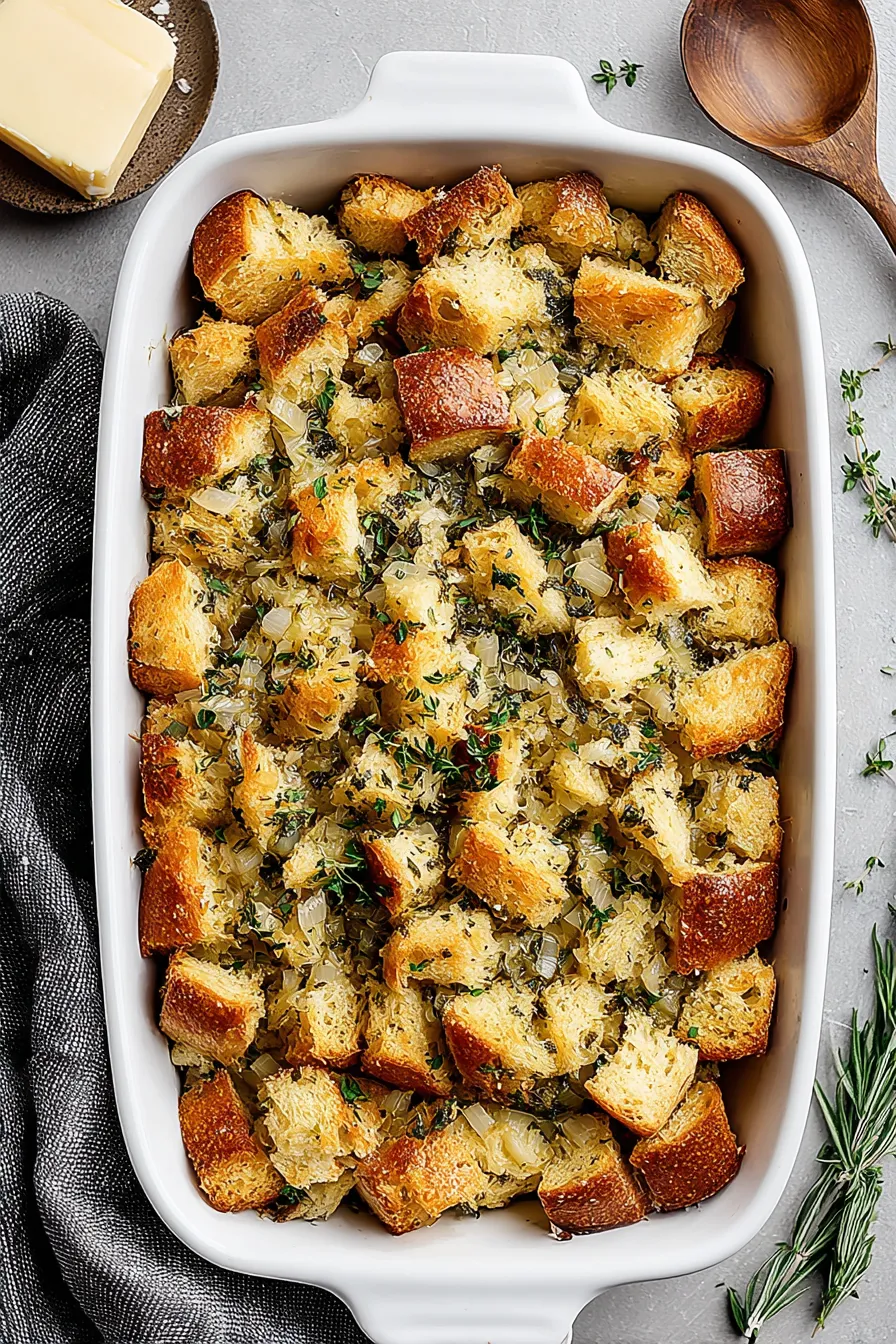
My favorite aspect is the versatility. I have made this for small family dinners and scaled it up for 18 people without losing any of the texture or flavor. People will tell you they prefer the center piece that is soft and custardy, while children and my uncle always race for the crispy perimeter. These differences make serving a joy because every preference is satisfied.
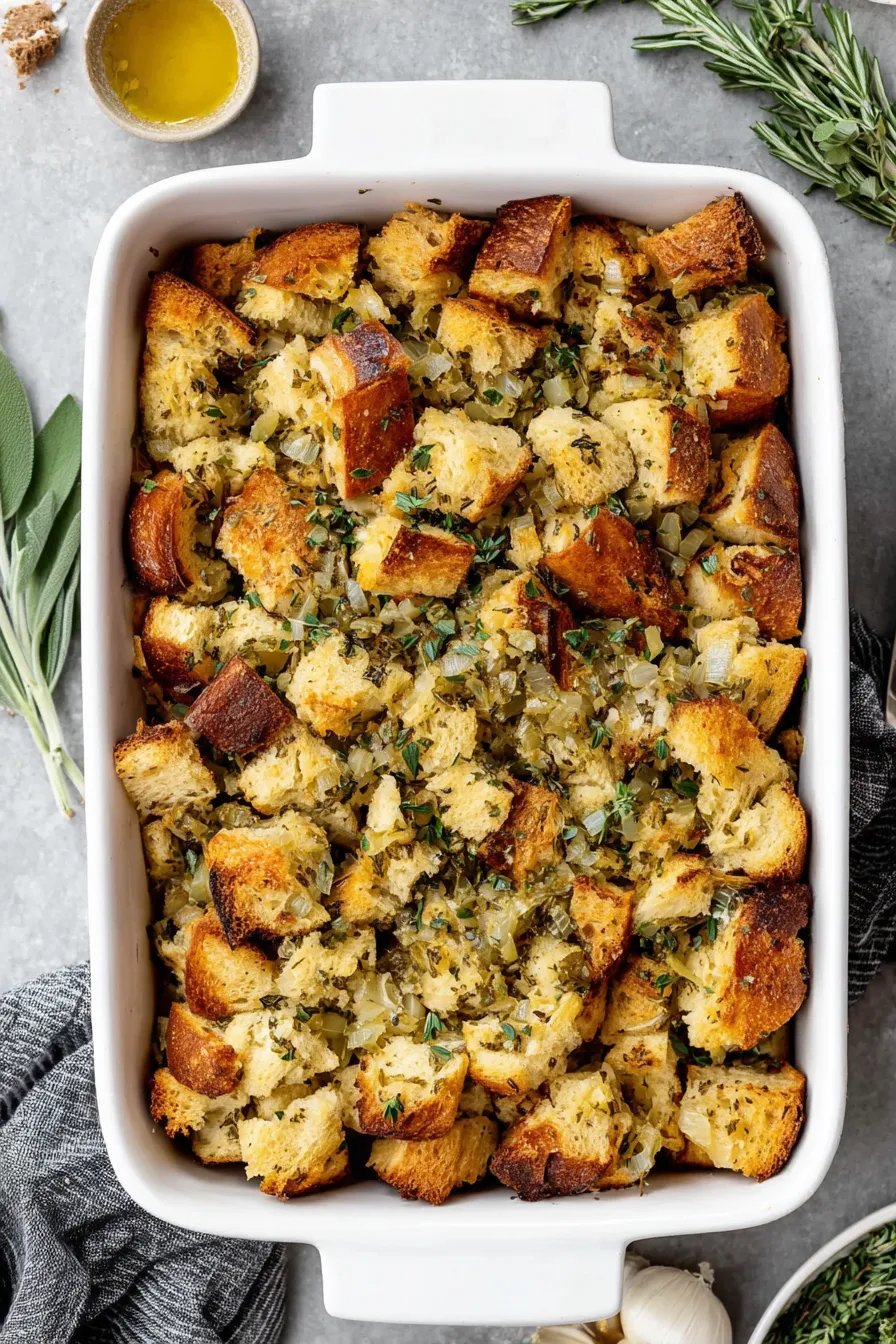
Store leftovers in an airtight container in the refrigerator for up to four days. Reheat gently in a 350 degrees F oven covered with foil for 20 to 30 minutes, or microwave individual portions until warmed through. To freeze, cool completely and transfer to a shallow, freezer-safe container; freeze for up to three months. Thaw in the refrigerator overnight and reheat in a preheated oven, uncovered for the last five minutes to recrisp the edges. Use glass or metal pans for even heating when reheating.
If you need a vegetarian version, swap chicken stock for vegetable stock with equal volume; if dairy-free, replace butter with a neutral oil or vegan butter in a 1:1 ratio. If fresh herbs are unavailable, use 1 teaspoon dried sage and 1 teaspoon dried rosemary plus 2 tablespoons dried parsley, but reduce the quantity because dried herbs are more concentrated. For gluten-free, choose a gluten-free bread blend and ensure stock is gluten-free. Using torn, rustic bread rather than uniform cubes creates a more varied texture.
Serve alongside roasted turkey, baked ham, or a simple roast chicken. For a vegetarian holiday plate, pair with roasted root vegetables, glazed carrots, and a green salad with a bright vinaigrette. Garnish with a sprinkle of extra chopped parsley and a few crunchy fried sage leaves for contrast. It also pairs well with tangy cranberry sauce or a sharp mustard gravy to cut through the richness. Plating pieces with browned tops face-up keeps the best texture on display.
Stuffing has roots in many culinary traditions where bread and aromatics are used to stretch ingredients into satisfying dishes. In the United States stuffing commonly complements holiday feasts, combining local herbs and available bread types. The use of sage and rosemary in this version reflects classic New England and Midwestern flavors where poultry and savory herbs are common. The technique of toasting bread first to control moisture absorption is a longstanding practice that helps achieve the desirable contrast between crusty exterior and tender interior.
In autumn, add small cubes of roasted apple or pear for a sweet counterpoint, and swap some parsley for chopped thyme. For winter gatherings, fold in roasted chestnuts or toasted walnuts for texture. Spring versions can include spring onions and peas, and summer adaptations benefit from basil and lemon zest for brightness. Spicing the butter with a pinch of nutmeg or a grating of lemon rind changes the profile subtly and keeps this dish feeling fresh across seasons.
Make the vegetable mixture and toast the bread a day ahead. Store the bread cubes and sautéed vegetables separately; combine with beaten eggs and warm stock just before baking. If you plan to transport, bake in disposable foil pans and cover tightly with foil. When serving a crowd, bake two 9x13 pans side by side; the preparation time stays almost the same. Label and date any frozen portions and write reheating instructions to save decision-making later.
Whether it becomes a holiday staple or your favorite weeknight side, this buttery, herb-forward dish rewards a bit of planning and a few honest ingredients. It invites sharing, conversation, and seconds at the table. Try it once and you may find, as my family did, that it becomes central to any meal that calls for comfort and flavor.
Toast fresh bread cubes lightly at 350 degrees F for 12 to 18 minutes to ensure they absorb liquid without becoming soggy.
Use a mix of two types of bread—such as sourdough and Italian—for the best contrast in texture and flavor.
If making ahead, cool the pan completely before covering and refrigerating; remove from the refrigerator 60 minutes before reheating to take the chill off.
This nourishing our favorite buttery herb stuffing recipe is sure to be a staple in your kitchen. Enjoy every moist, high protein slice — it is perfect for breakfast or as a wholesome snack any time.
This Our Favorite Buttery Herb Stuffing recipe makes perfectly juicy, tender, and flavorful steak every time! Serve with potatoes and a side salad for an unforgettable dinner in under 30 minutes.
Cut bread into cubes and either let them sit out overnight to stale, or spread on a baking sheet and toast at 350 degrees F for 12 to 18 minutes until dry but not overly browned. Use a mix of two bread types for best texture.
Preheat oven to 350 degrees F. Brush a 9x13 baking dish with melted butter or spray lightly with nonstick spray. You can divide mixture between two pans if preferred.
Melt 1 cup unsalted butter in a large skillet over medium heat. Add diced onion and celery with 1/2 to 1 teaspoon kosher salt and black pepper. Cook 8 to 10 minutes until soft. Add garlic and cook 1 minute. Stir in chopped sage, parsley, and rosemary and cook 30 to 60 seconds.
Pour 1 cup warm stock into the skillet to deglaze. Let simmer 1 minute, then pour the mixture over the bread cubes and toss to coat so the bread begins absorbing liquid.
Whisk remaining 1 1/2 cups stock with 2 beaten eggs. Pour over the bread mixture and fold gently until well combined and moistened but not soggy. Adjust with up to 1/4 cup more stock if needed.
Bake at 350 degrees F for 45 to 50 minutes until internal temperature reaches 160 degrees F. Tent with foil if browning too quickly. Let rest 10 minutes before serving.
Last Step: Please leave a rating and comment letting us know how you liked this recipe! This helps our business to thrive and continue providing free, high-quality recipes for you.
Leave a comment & rating below or tag
@cravele on social media!
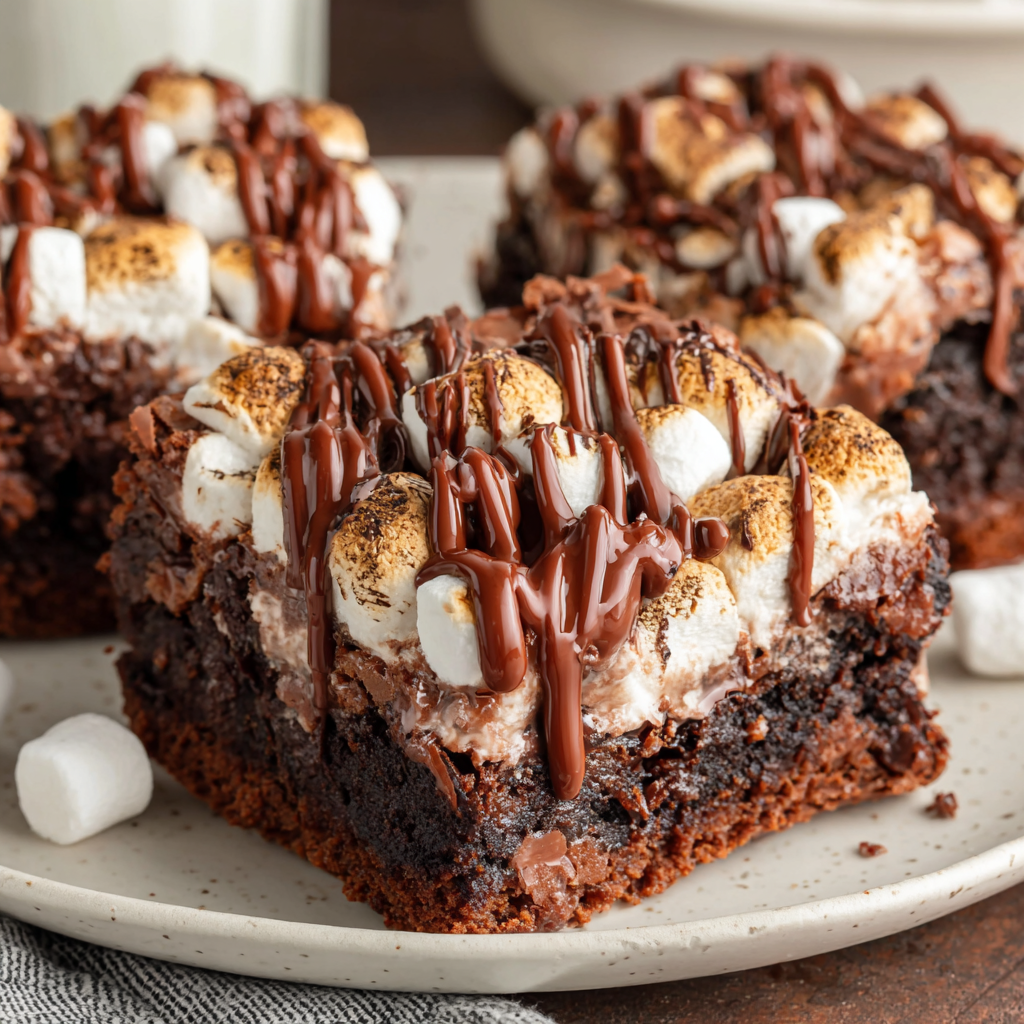
Ultra-fudgy brownies studded with chocolate chunks, crowned with gooey marshmallows and a quick cocoa icing for irresistible, crowd-pleasing decadence.
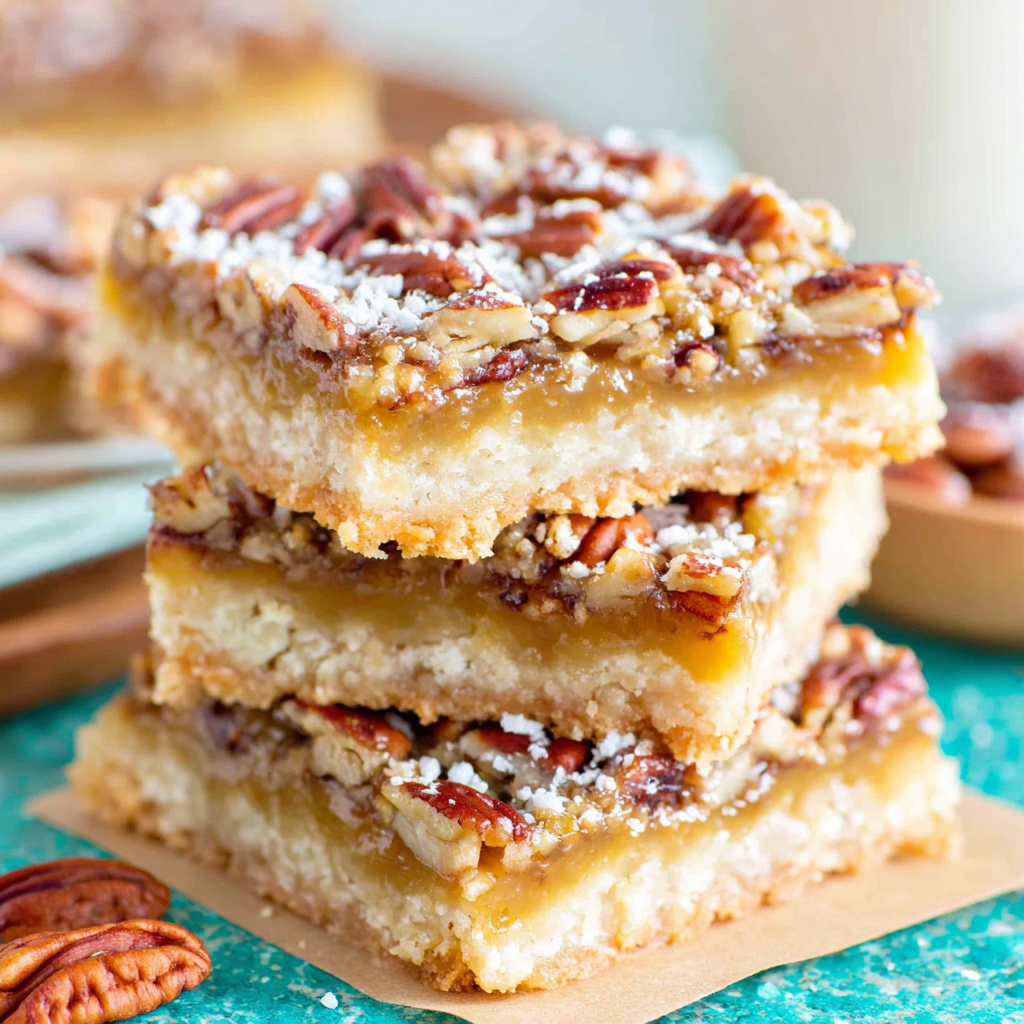
Buttery shortbread crust topped with a gooey brown sugar pecan filling. Easy, crunchy, and truly irresistible with just 10 minutes of prep.
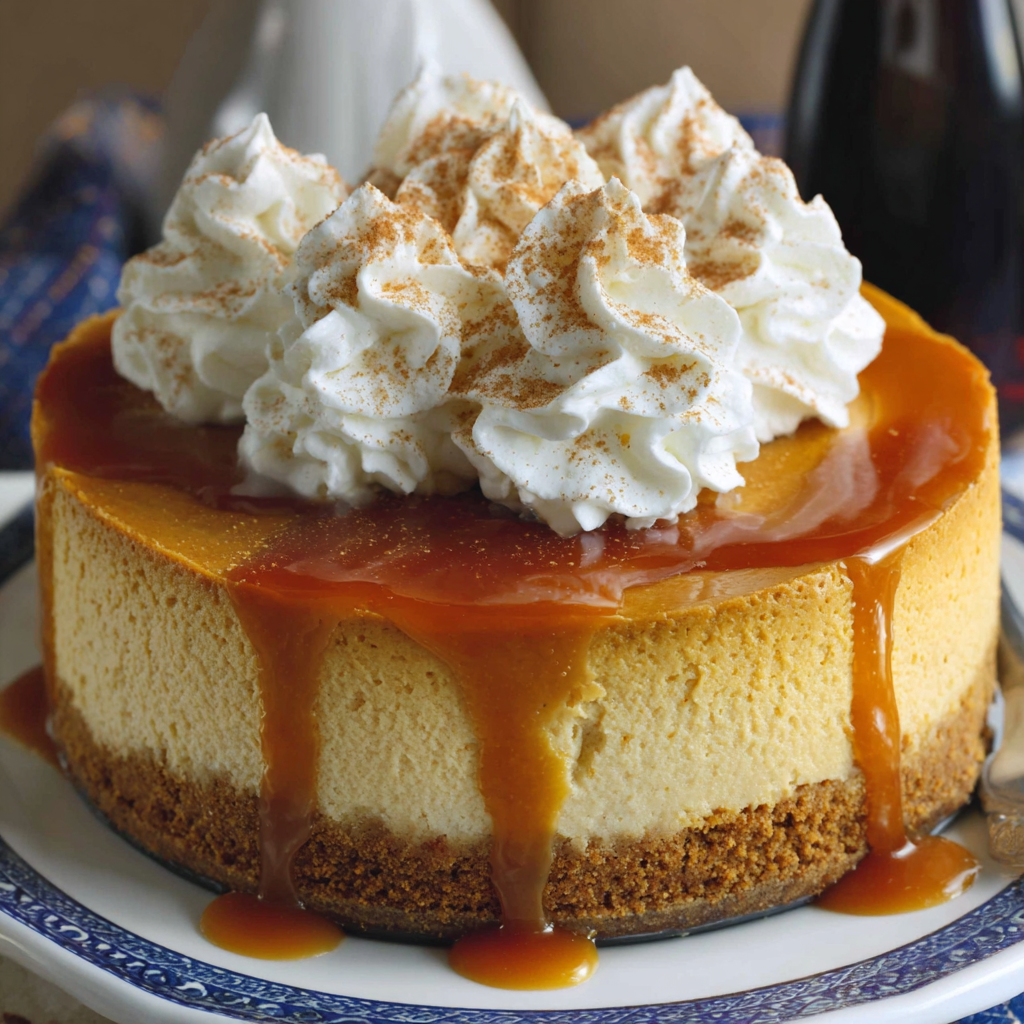
Silky pumpkin cheesecake with a spiced graham crust, no cracks, effortless mixing, and decadent caramel and rum whipped cream for unforgettable holiday celebrations.
Leave a comment & rating below or tag @cravele on social media!
Enjoyed this recipe? Share it with friends and family, and don't forget to leave a review!
This recipe looks amazing! Can't wait to try it.
Comments are stored locally in your browser. Server comments are displayed alongside your local comments.

Join to receive our email series which contains a round-up of some of our quick and easy family favorite recipes.