>>

Soft, fragrant cubes of rosewater-scented lokum that set to a tender, chewy bite — a memorable edible gift and a timeless treat to share.
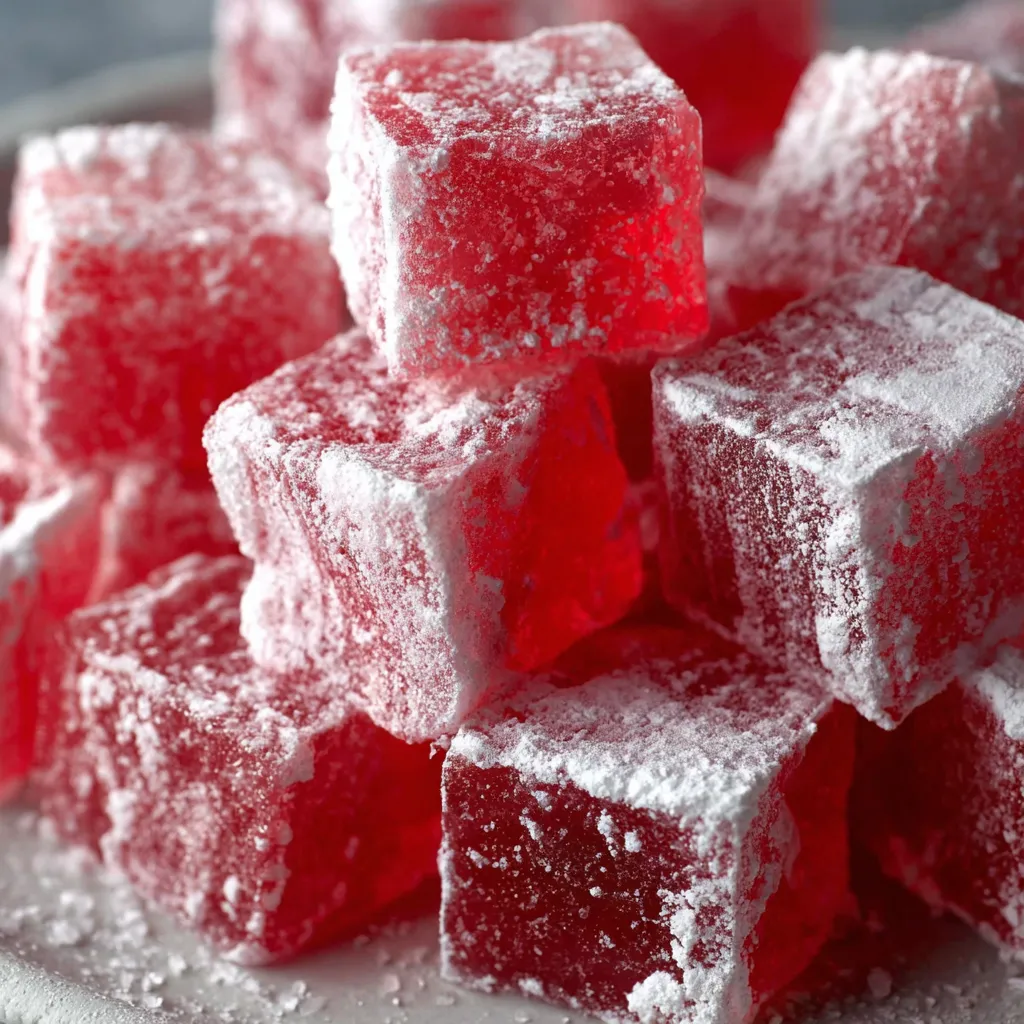
This rosewater-scented lokum has been my favorite slow-kitchen project for years. I first discovered the method while visiting a friend who grew up in Istanbul; her grandmother taught us how precise patience and a good whisk transform humble pantry staples into something nearly magical. The first batch filled the house with floral sweetness and a warm, caramel-tinted scent that had everyone hovering nearby. Since then I make it for holiday gatherings and small gifts, and it never fails to feel like an event.
The texture is the hallmark: tender but resilient, with a soft chew that dissolves pleasantly on the tongue. The surface holds a delicate powdering that prevents clumping and gives each cube a classic snow-dusted look. Taste-wise, the rosewater is floral without being perfumed, balanced by the subtle caramel notes that develop during the long simmer. It’s deceptively simple in ingredients yet deceptively technical in technique — watch the syrup temperature, be patient during the long simmer, and you will be rewarded with perfect cubes that slice cleanly and pair beautifully with coffee.
When I make this, family members line up for tastes as the mixture cools. One winter I brought a batch to a potluck and people asked for the recipe twice that night. It’s the kind of recipe that sparks questions about technique and always leads to a conversation about where the flavors came from.
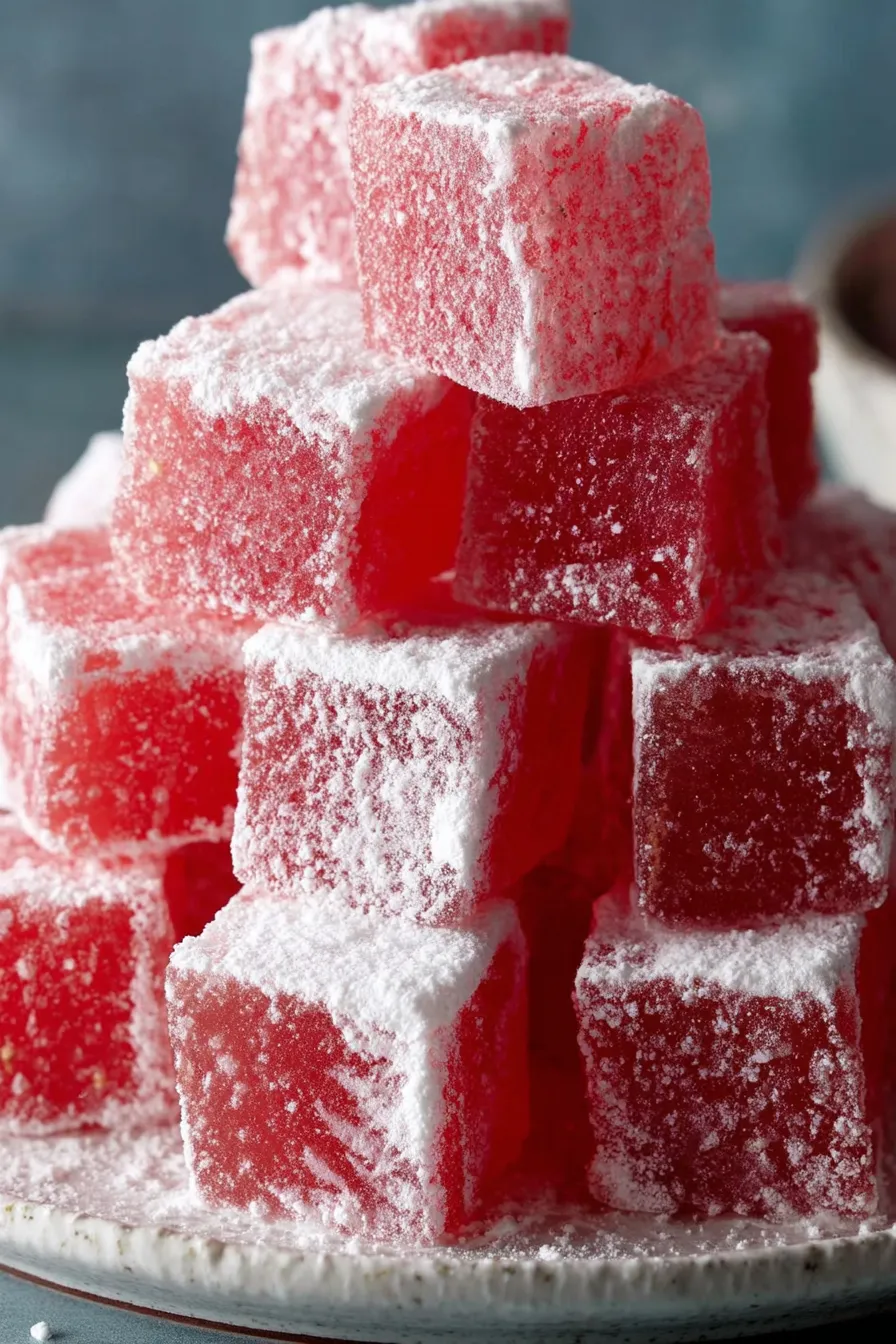
My favorite part is the moment I lift the set slab from the container — the soft thump and the light floury cloud when I flip it over. People often tell me the texture brings back memories of travels; the confection invites conversation, which is why I love making it when friends come by.
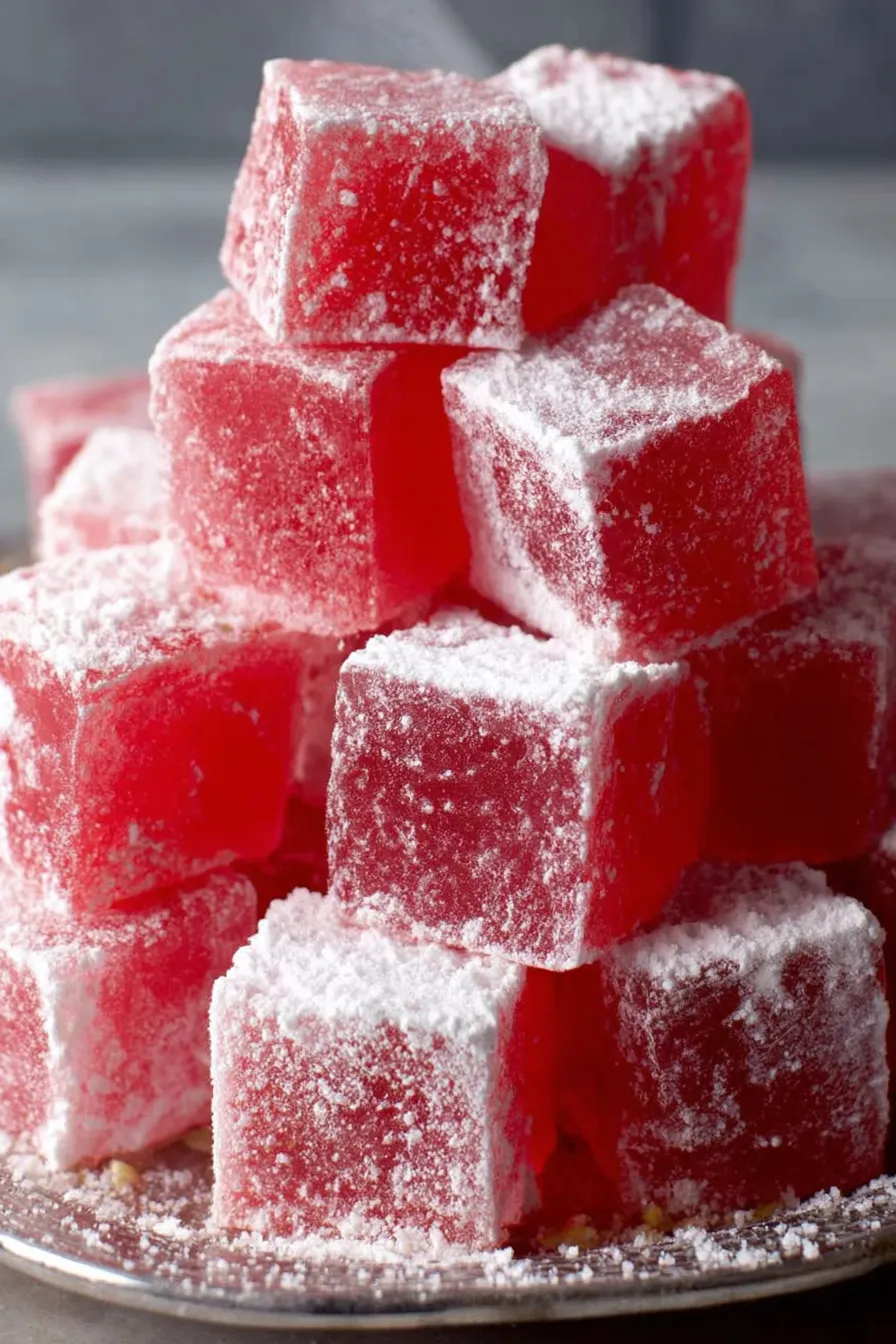
Store in an airtight container at room temperature in a cool, dry place for up to one week. For longer storage, wrap cubes individually in parchment and place in a freezer-safe container; they keep well for up to three months. Avoid refrigeration, which can introduce moisture and make the surface sticky. When thawing frozen cubes, bring them to room temperature before unwrapping to prevent condensation. Check the surface for stickiness or discoloration as an indicator of moisture exposure.
For a nutty variation, fold 1/2 cup toasted pistachios into the molten mass before it sets; the pieces will be slightly denser. Swap rosewater for orange blossom water at equal volume for a citrus-floral note. If you prefer no artificial coloring, use a few drops of beet juice concentrate for a natural pink hue, though color intensity will be milder. Avoid using potato starch as a straight swap for cornstarch without testing ratios; cornstarch provides the classic gel strength for this method.
Present cubes on a small platter dusted with extra powdered sugar and a few crushed pistachios for color contrast. Serve with strong, unsweetened coffee and a glass of water to cleanse the palate. For a playful dessert, sandwich a cube between two plain biscuits such as Biscoff or shortbread. The candies also pair nicely with mild cheeses on a small board for an eclectic tasting plate.
Lokum, commonly called Turkish delight, originated in the Ottoman Empire and became popular across Europe in the 19th century. Traditionally flavored with rose or mastic and sometimes studded with nuts, it was both a daily treat and a ceremonial gift. Regional variations exist across Turkey and the Balkans; in places like Gaziantep, pistachio-filled versions are celebrated. The confection’s long history is reflected in its ritualized service alongside coffee and hospitality.
In spring, use rosewater and a light pink color for celebratory occasions; in autumn, fold in a small amount of ground cinnamon and orange zest for warming notes. Holiday versions can include chopped dried fruits or cranberries for color. For summer, make smaller, bite-sized cubes and chill briefly before serving on a cool platter to keep them fresh in warm weather.
Make the syrup and the slurry in the morning, then complete the long simmer while you attend to other tasks. Pour into the mold and set overnight; cut and dust the next day when you have clean workspace. Use shallow airtight containers for stacking and line with parchment to protect the dusting. Portion cubes into small boxes or tins for gifting, and include a note to store in a cool, dry place.
Making lokum is as much about process as the final sweet. Take your time, enjoy the rhythm of whisking and stirring, and share the pieces that turn out best. It’s an approachable project that rewards patience with something unexpectedly elegant.
Use a heavy-bottomed pan and low steady heat during the long simmer to prevent scorching.
Whisk continuously when combining syrup and slurry to avoid lumps and ensure a smooth gel.
Dust your knife with cornstarch before cutting to get clean edges without tearing.
Add rosewater off heat and taste cautiously; flavor concentrates as the mass sets.
This nourishing homemade turkish delight (lokum) — classic rosewater recipe is sure to be a staple in your kitchen. Enjoy every moist, high protein slice — it is perfect for breakfast or as a wholesome snack any time.
Freeze cubes in an airtight container for up to three months. Thaw at room temperature to avoid condensation.
Yes. If you do not have a candy thermometer, test a small amount of syrup in very cold water to see if it forms a hard ball, but a thermometer is strongly recommended for reliability.
This Homemade Turkish Delight (Lokum) — Classic Rosewater recipe makes perfectly juicy, tender, and flavorful steak every time! Serve with potatoes and a side salad for an unforgettable dinner in under 30 minutes.
Combine sugar, citric acid, and 3/4 cup water in a heavy-bottomed pan and stir until the sugar dissolves completely. Dissolving before heating prevents graininess during the boil.
Bring to a boil over high heat, then reduce to a simmer and cook until 250 F on a candy thermometer. This typically takes 15 to 30 minutes and concentrates the syrup.
Whisk 1/2 cup plus 1 tablespoon cornstarch with 2 cups plus 5 teaspoons water until perfectly smooth. Use a jar or blender to eliminate lumps.
Turn off heat and whisk the slurry into the syrup gradually to avoid clumping. The mixture will begin to thicken as the starch hydrates.
Return to medium-low heat and whisk until gel-like. Reduce to a gentle simmer and stir periodically to prevent sticking and scorching.
Simmer for 1 to 2 hours until a medium-dark amber color and a thick but still pourable texture develop. Stir more frequently toward the end for even cooking.
Lightly oil a 5 x 7 inch container or line with plastic wrap to aid release. A smaller pan yields thicker pieces; a larger pan makes thinner cubes.
Off the heat, stir in 1 1/2 teaspoons rosewater and 10 drops red food coloring. Mix gently and pour into the prepared mold, smoothing the top.
Allow to set at room temperature for a minimum of 5 hours, preferably overnight. Cooler, drier environments yield firmer, easier-to-cut pieces.
Dust the surface with 1/4 cup cornstarch, lift the slab from the mold, dust again, then cut into about 40 one-inch cubes using a cornstarch-dusted knife.
Toss cubes in a mixture of 2/3 cup cornstarch and 1/3 cup powdered sugar to prevent sticking and create the classic finish.
Serve with strong coffee and water. Store in airtight containers at room temperature up to one week or freeze for up to three months.
Last Step: Please leave a rating and comment letting us know how you liked this recipe! This helps our business to thrive and continue providing free, high-quality recipes for you.
Leave a comment & rating below or tag
@cravele on social media!

Ultra-fudgy brownies studded with chocolate chunks, crowned with gooey marshmallows and a quick cocoa icing for irresistible, crowd-pleasing decadence.
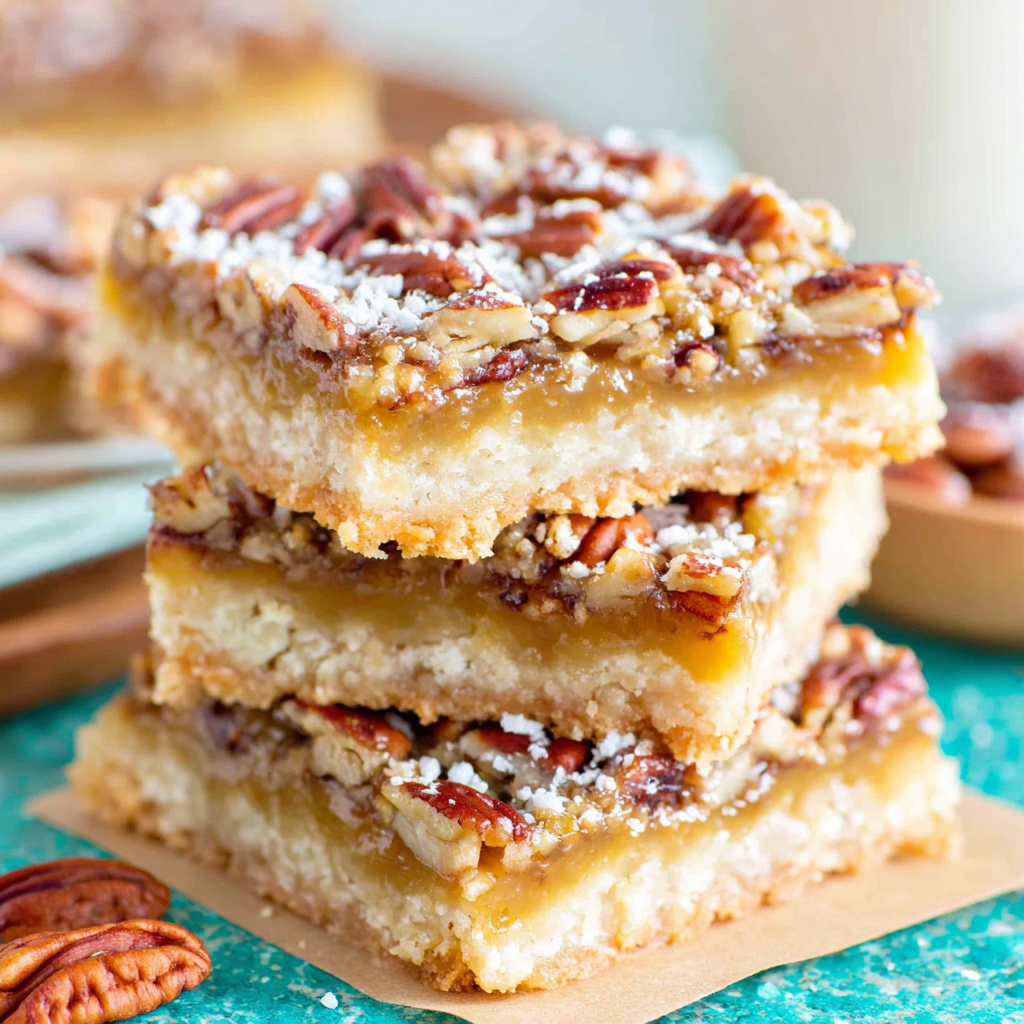
Buttery shortbread crust topped with a gooey brown sugar pecan filling. Easy, crunchy, and truly irresistible with just 10 minutes of prep.
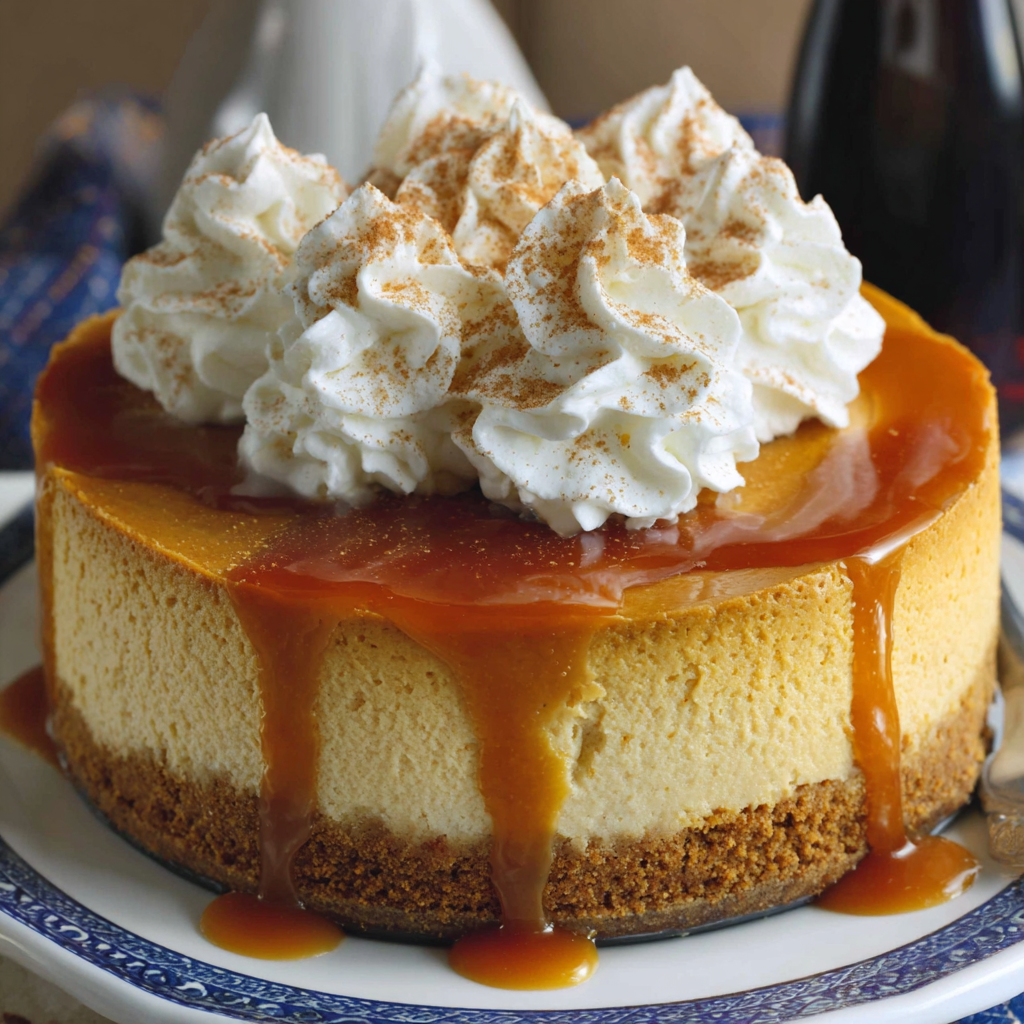
Silky pumpkin cheesecake with a spiced graham crust, no cracks, effortless mixing, and decadent caramel and rum whipped cream for unforgettable holiday celebrations.
Leave a comment & rating below or tag @cravele on social media!
Enjoyed this recipe? Share it with friends and family, and don't forget to leave a review!
This recipe looks amazing! Can't wait to try it.
Comments are stored locally in your browser. Server comments are displayed alongside your local comments.

Join to receive our email series which contains a round-up of some of our quick and easy family favorite recipes.