>>

A slow-braised, deeply flavored pot roast with tender beef and a bounty of winter vegetables — a family-friendly weekend staple.
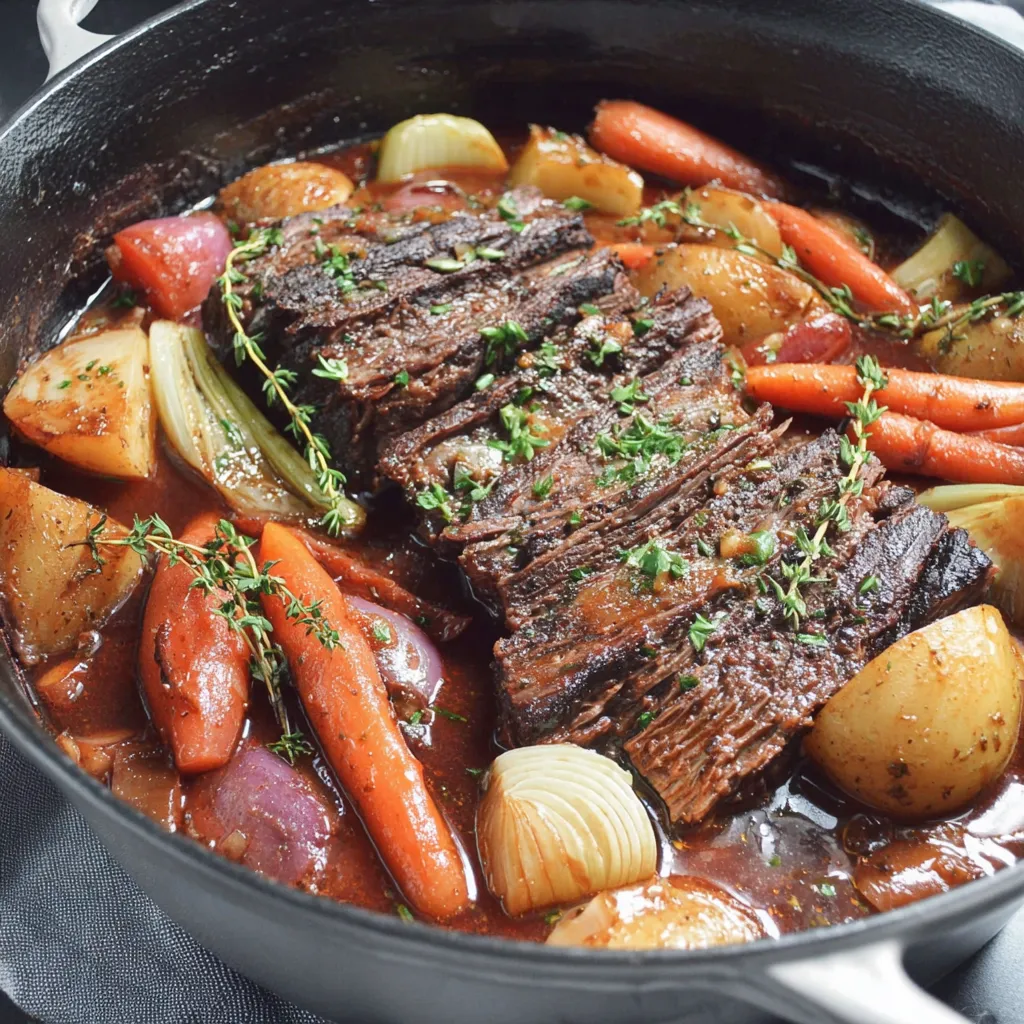
This pot roast has been my go-to for chilly Sundays and holiday gatherings for years. I first learned this approach while working through a week of cold-weather menus: I wanted a braise that tasted rich without being fussy, and that could be started in the morning and served with little stress later in the day. The long, slow cooking turns a 3 1/2 to 4 pound chuck roast into fork-tender slices that melt in your mouth, while the vegetables soak up the savory braising liquid. The aroma alone — browned meat, caramelized onions, garlic, herbs and a hint of red wine — is enough to bring everyone to the table.
What makes this preparation special is the layering of flavors: a thorough overnight salt rest, a deep sear to build caramelized crust, concentrated tomato paste, deglazing with red wine, and gentle oven braising at a low temperature until the collagen softens into silk. The final thickened sauce, finished with a small beurre manié and a splash of red wine vinegar and Worcestershire sauce, ties everything together with brightness and depth. It’s the kind of dish that creates memories — my family still talks about the first time I served it for a snowy dinner when a guest asked for the recipe before dessert.
Personally, the most satisfying moment is lifting the pot lid after hours in the oven and seeing a deep mahogany liquid and vegetables that smell like home. Guests often comment on how tender the beef is and how the sauce tastes like it’s been simmering for days — that’s the magic of low-and-slow braising.
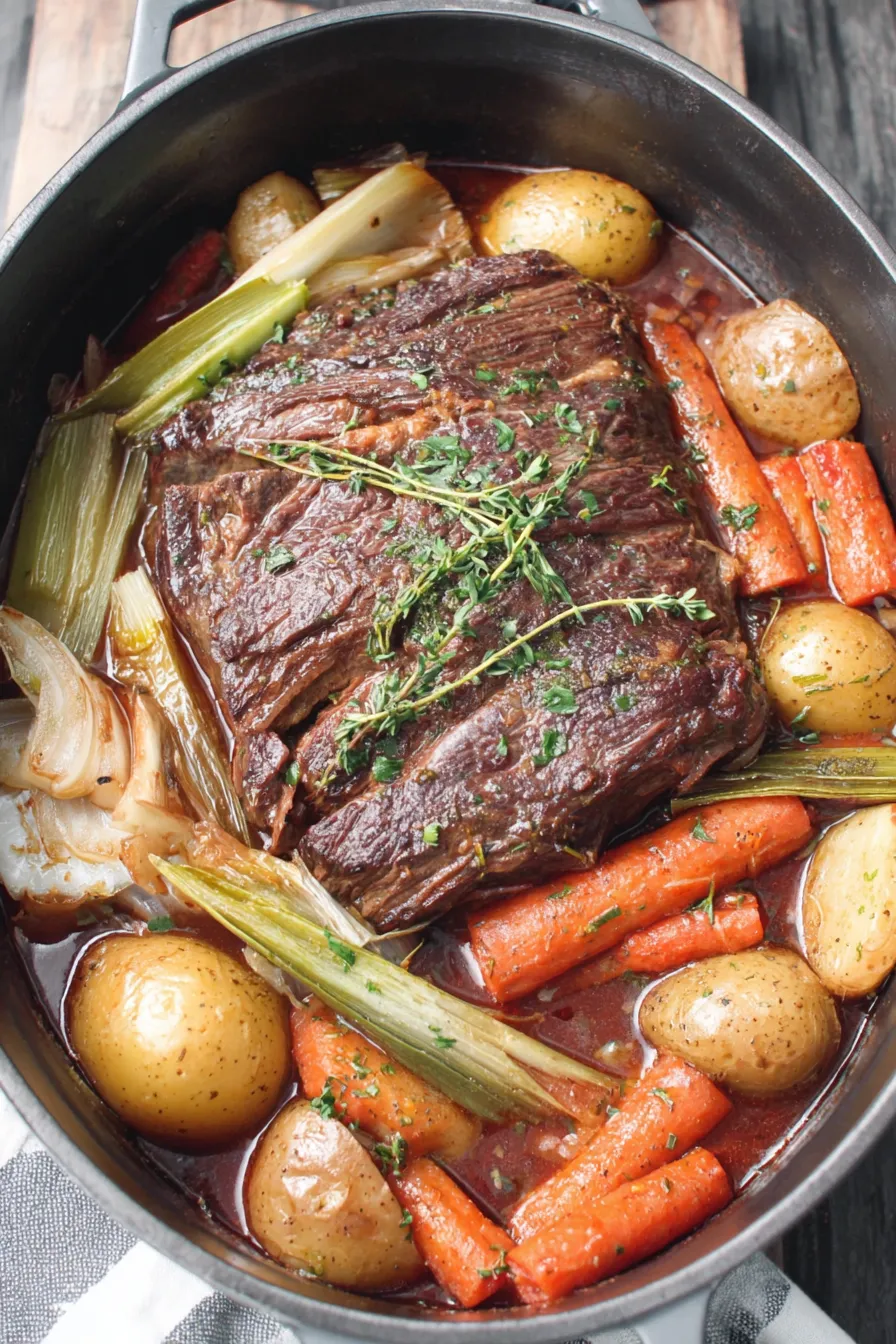
My favorite aspect is the flexibility: start early and let the oven do the work while you relax. Family members often rave about the gravy — small additions like a splash of vinegar and a dash of Worcestershire at the end brighten the whole pot and lift the flavors in a way that always surprises guests.
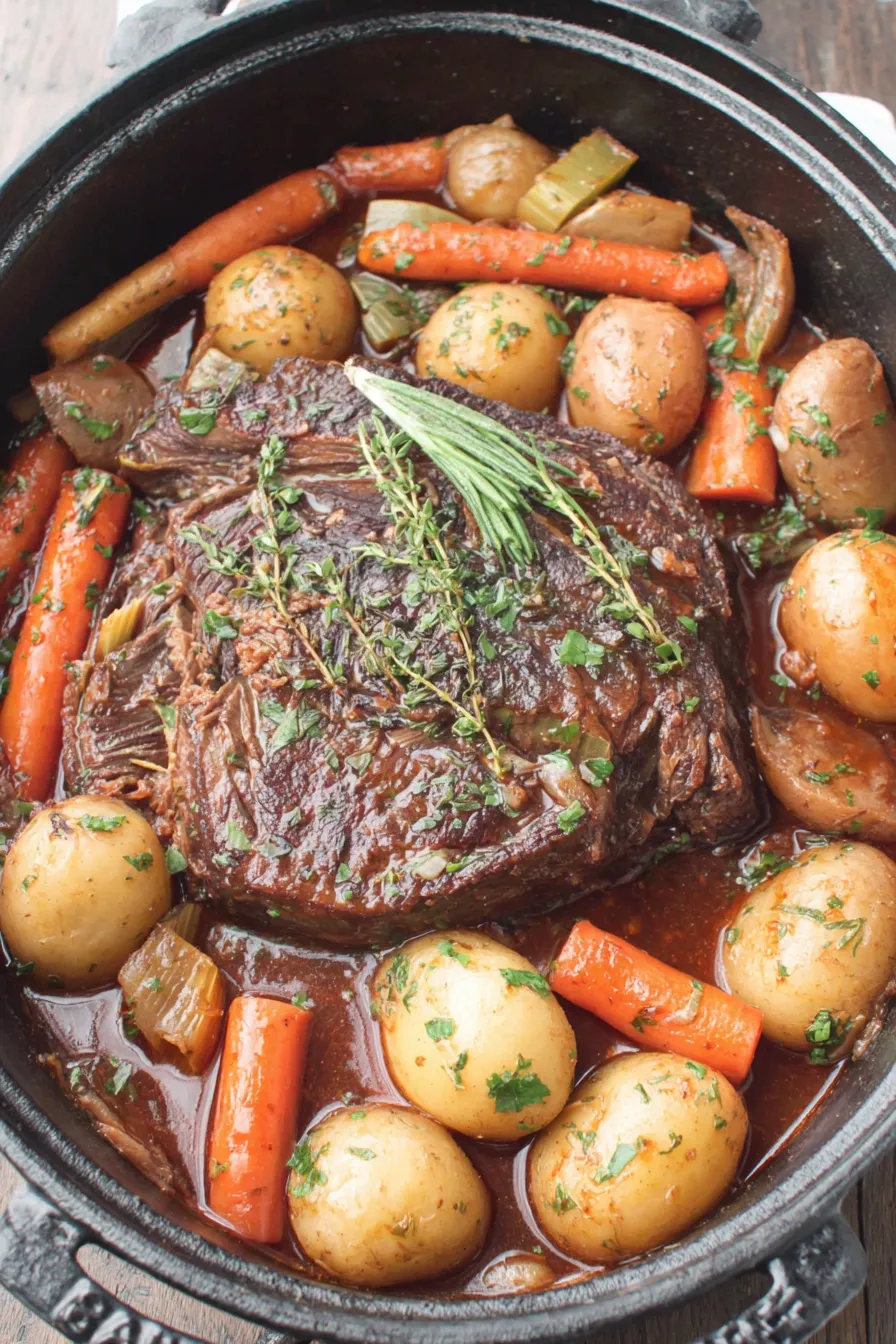
Cool any leftovers to room temperature within two hours and refrigerate in airtight containers for up to four days. For freezing, divide into meal-sized portions, submerge meat and vegetables in the braising liquid in freezer-safe containers or bags, and freeze up to three months. Reheat gently over low heat on the stovetop so the sauce warms evenly; adding a splash of stock or water can help if the sauce has thickened too much during storage.
If chuck roast isn’t available, a blade roast or rump roast work as alternatives, though cooking times may vary slightly. Substitute red wine with 1 cup additional beef stock and 1 tablespoon balsamic vinegar if you prefer not to use alcohol. For a gluten-free version, replace the beurre manié with a cornstarch slurry (1 tablespoon cornstarch mixed with 1 tablespoon cold water) added at the end to thicken the sauce. Vegetable swaps like turnips or sweet potatoes give different sweetness profiles — reduce cooking time for sweet potatoes to prevent over-softening.
Serve thick slices of the roast with a generous ladle of gravy and a mound of the braised vegetables. This pairs beautifully with simple buttered egg noodles, creamy mashed potatoes, or crusty bread to mop up sauce. Garnish with finely minced parsley for color and a fresh herbal note. For a special occasion, add roasted mushrooms sautéed in butter as a topping.
Slow-braised beef over root vegetables is a classic technique across many Western cuisines. This method harks back to peasant dishes where tougher cuts were transformed into tender meals through long, slow cooking. European variations include French pot-au-feu and British Sunday roasts; each emphasizes low heat, aromatic herbs, and the use of inexpensive cuts to create comforting, communal food.
In winter, maximize root vegetables like rutabaga and parsnips; in spring swap in baby turnips and spring carrots for a brighter finish. For summer gatherings, reduce the braising time slightly and finish the dish with lighter sides such as a green salad and lemony gremolata to cut through the richness.
Make the roast a day ahead — it improves as flavors meld overnight. Reheat gently the next day, then slice and serve; the sauce will thicken when chilled, making it easy to skim fat from the top if desired. Portion into meal-sized containers with a scoop of vegetables for quick weekday dinners.
This classic pot roast brings warmth and uncomplicated luxury to the table. It’s a dish for slow afternoons, lively dinners, and the kind of cooking that rewards patience with soulful flavors. Invite friends, share the gravy, and let the oven do the work.
Dry-salt the roast in the refrigerator for at least 12 hours to concentrate flavor and improve crust formation during searing.
Sear over high heat to develop a deep browning; this Maillard reaction is the foundation of the final sauce.
Add hardy root vegetables with around 70 minutes left so they finish tender but retain shape.
Finish the sauce with a small splash of red wine vinegar and Worcestershire sauce to brighten the braise.
If the sauce is too thin, whisk in a beurre manié or a cornstarch slurry gradually until desired thickness is achieved.
This nourishing classic pot roast recipe is sure to be a staple in your kitchen. Enjoy every moist, high protein slice — it is perfect for breakfast or as a wholesome snack any time.
This Classic Pot Roast recipe makes perfectly juicy, tender, and flavorful steak every time! Serve with potatoes and a side salad for an unforgettable dinner in under 30 minutes.
Generously season the beef on all sides with coarse salt and place on a rack over a sheet tray. Refrigerate uncovered for 12 to 48 hours to dry-brine.
Remove from refrigerator about 1 hour before cooking. Pat dry and season all sides with freshly cracked pepper.
Heat 2 tablespoons olive oil in a large Dutch oven until it just begins to smoke. Sear the roast on all sides, 3 to 4 minutes per side, until deep golden brown.
Remove roast. Add onion and leeks, season with salt, and sauté 4 to 6 minutes, then lower heat and cook 10 minutes until well browned. Add garlic and cook 30 to 45 seconds.
Deglaze with 1/4 cup red wine, scraping up browned bits until absorbed. Stir in tomato paste and cook 2 to 3 minutes. Add remaining wine, beef stock, bay leaves, thyme, parsley, salt, and pepper.
Return roast to pot, bring to a boil, cover, and place in a 325°F oven on a lower rack. Cook 3 1/2 to 4 hours until roast is fork-tender and internal temperature is 200°F to 210°F.
With about 70 minutes remaining, add potatoes, carrots, celery, parsnips, and rutabaga to the pot to finish cooking with the meat.
Remove roast, whisk in beurre manié to the braising liquid over low heat and simmer 3 to 5 minutes until thickened. Stir in red wine vinegar and Worcestershire sauce to taste, return roast to pot, and rest 10 minutes before serving.
Last Step: Please leave a rating and comment letting us know how you liked this recipe! This helps our business to thrive and continue providing free, high-quality recipes for you.
Leave a comment & rating below or tag
@cravele on social media!

Ultra-fudgy brownies studded with chocolate chunks, crowned with gooey marshmallows and a quick cocoa icing for irresistible, crowd-pleasing decadence.

Buttery shortbread crust topped with a gooey brown sugar pecan filling. Easy, crunchy, and truly irresistible with just 10 minutes of prep.

Silky pumpkin cheesecake with a spiced graham crust, no cracks, effortless mixing, and decadent caramel and rum whipped cream for unforgettable holiday celebrations.
Leave a comment & rating below or tag @cravele on social media!
Enjoyed this recipe? Share it with friends and family, and don't forget to leave a review!
This recipe looks amazing! Can't wait to try it.
Comments are stored locally in your browser. Server comments are displayed alongside your local comments.

Join to receive our email series which contains a round-up of some of our quick and easy family favorite recipes.